Can you enjoy wide, open living areas without feeling like your entire home is on display? Many homeowners believe they must choose between expansive layouts and meaningful privacy. The truth is, experienced luxury home builders know how to deliver both.
Thoughtful custom home design makes it possible to preserve open sightlines while creating comfortable, private areas for work, rest, and family life. In this article, you will learn how privacy is integrated into modern home construction, why it matters, and how custom homes can feel spacious without feeling exposed.
Designing Privacy Into Open-Concept Living
Privacy in an open floor plan is not about adding walls everywhere. It is about creating intentional layers within shared space. In many custom homes, Wisconsin homeowners request that the kitchen, dining, and living areas flow together. This layout encourages connection and makes entertaining easy. But daily life still requires quiet zones.
Luxury home builders approach this by designing visual and acoustic separation. A partial wall can shield a workspace. Built-in shelving can define a reading nook. A subtle ceiling change can signal a transition from one space to another. When these decisions are made early in the custom home design phase, they feel seamless. They are built into the structure, not added as an afterthought. At Matustik Builders, privacy strategies are considered from the first sketches. That early planning makes all the difference in the finished result.
How Privacy Is Built Into Modern Home Construction
Creating privacy without sacrificing openness requires coordination during home construction. It is not one feature. It is a layered approach.
Luxury home builders typically focus on three areas:
- Floor plan zoning
- Architectural definition
- Sound and light control
Each element supports the others.
Smart Floor Plan Zoning
Privacy starts with layout. Before walls go up, custom home design determines how spaces relate to one another. For example, a home office placed slightly off the main living area feels connected but protected. Bedrooms located down a short hallway feel more secluded, even in an open main level.
In custom homes Wisconsin families are building today, zoning is especially important for multigenerational living. Separate bedroom wings or private guest suites allow independence without isolation. Zoning does not require extra square footage. It requires thoughtful planning.
Architectural Definition Without Full Enclosure
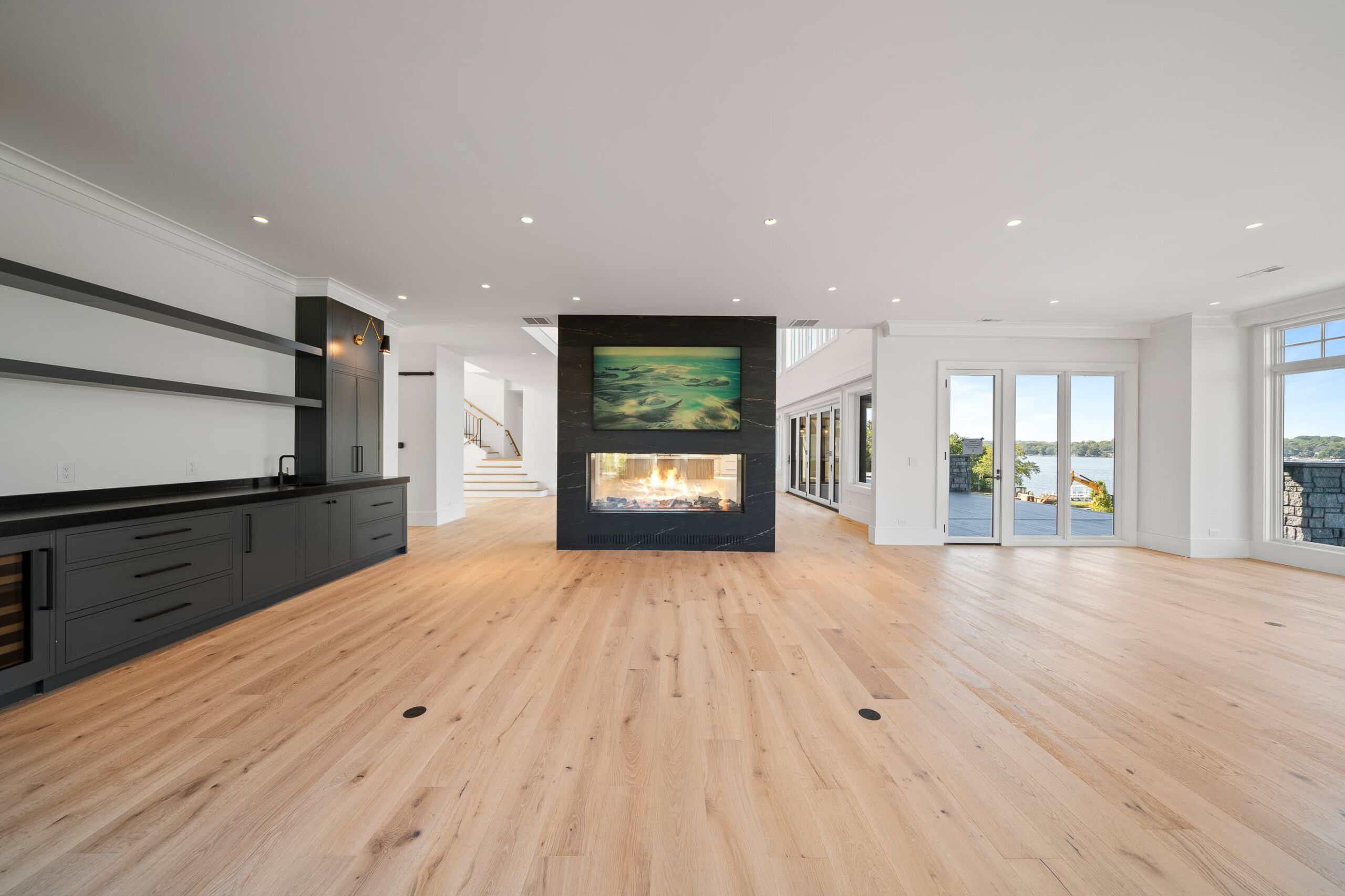
Open concept does not mean empty space. Subtle architectural elements can define rooms without closing them off. A double-sided fireplace can separate a living room from a dining area. Built-in cabinetry can create a soft boundary. Ceiling beams or tray ceilings visually distinguish one area from another.
Glass panels are another elegant solution. Frosted or textured glass allows light through while limiting direct views. During home construction, these features must be integrated carefully to maintain both structure and design harmony. The goal is simple. Keep the openness. Add just enough separation to make each space feel intentional.
Managing Sound and Light
Noise is one of the biggest challenges in open layouts. According to the National Association of Home Builders, open floor plans remain highly desirable, yet homeowners often cite sound control as a concern. Luxury home builders address this through insulation in strategic interior walls, solid-core doors for offices, and sound-absorbing materials. Rugs, upholstered furnishings, and acoustic panels all help reduce echo.
Lighting design also enhances privacy. Layered lighting allows you to create intimate zones within a larger space. Window placement and quality treatments protect views from neighbors while preserving natural light. When sound and light are managed correctly, open spaces feel calm rather than chaotic.
Why Privacy Matters in Custom Home Builds
Privacy is not just a design preference. It directly affects how your home functions. With remote work now common, dedicated office space is essential. Without acoustic separation, video calls and focused work become difficult.
Privacy also supports well-being. Research in environmental psychology suggests that people need access to both shared areas and personal retreat spaces. Homes that offer both tend to feel more balanced and less stressful.
For families, privacy reduces daily friction. Parents can unwind in the evening. Teenagers can study without distraction. Guests can stay comfortably without feeling exposed to every household activity. If privacy is overlooked during home construction, fixing it later can be costly. Adding walls or insulation after completion disrupts finishes and increases expense. Planning ahead avoids that issue entirely.
Benefits of Designing for Privacy in Open Spaces
When privacy is thoughtfully integrated into custom home design, the benefits are practical and long-lasting.
- Improved functionality: Each member of the household has space suited to their routine.
- Greater flexibility: Rooms can evolve as needs change over time.
- Stronger resale appeal: Buyers appreciate layouts that combine openness with thoughtful separation.
Luxury home builders understand that true comfort comes from balance.
Choosing the Right Privacy Strategy for Your Home
Every property and family is different. The right privacy approach depends on lifestyle, architecture, and location. Start by thinking about how you live. Do you host often? Do you work from home daily? Do you need multiple quiet spaces? These answers shape custom home design decisions.
Next, consider your surroundings. In communities such as Delavan, Fontana, Town of Linn, Williams Bay, and Lake Geneva, lot orientation and neighboring homes influence window placement and outdoor screening. Landscaping and covered outdoor spaces can enhance privacy without blocking views.
Work with experienced luxury home builders who prioritize collaboration. At Matustik Builders, privacy solutions are integrated into the design phase, not layered on later. Reviewing detailed plans helps you visualize how each space will function. Avoid relying only on furniture placement to create separation. Architecture, not décor, provides lasting privacy.
Frequently Asked Questions
Will privacy features make my home feel closed in?
No. When handled properly, architectural elements enhance dimension rather than restrict space. Subtle transitions often make rooms feel more intentional and refined.
Can privacy be achieved without increasing square footage?
Yes. Most solutions involve layout adjustments and material choices, not added space. Smart zoning is more effective than simply building larger rooms.
Are open-concept homes still desirable?
Absolutely. Open layouts remain popular, but expectations have evolved. Today’s custom homes blend openness with thoughtful separation.
Creating Open Spaces That Truly Support Daily Life
Open-concept living does not have to mean sacrificing comfort. With intentional custom home design and strategic home construction, privacy and openness can coexist beautifully. Luxury home builders who understand this balance create homes that feel expansive yet grounded. They design for how people actually live.
If you are planning custom homes that Wisconsin families can enjoy for decades, prioritize privacy from the start. Connect with Matustik Builders to explore how thoughtful design transforms open space into a home that truly works for you.